New GLP-1 Pill Approved as Ozempic MDL Nears Trial

CEO & Founder at LlamaLab
FDA Approves New GLP-1 Pill as Ozempic MDL Approaches Pretrial Deadlines
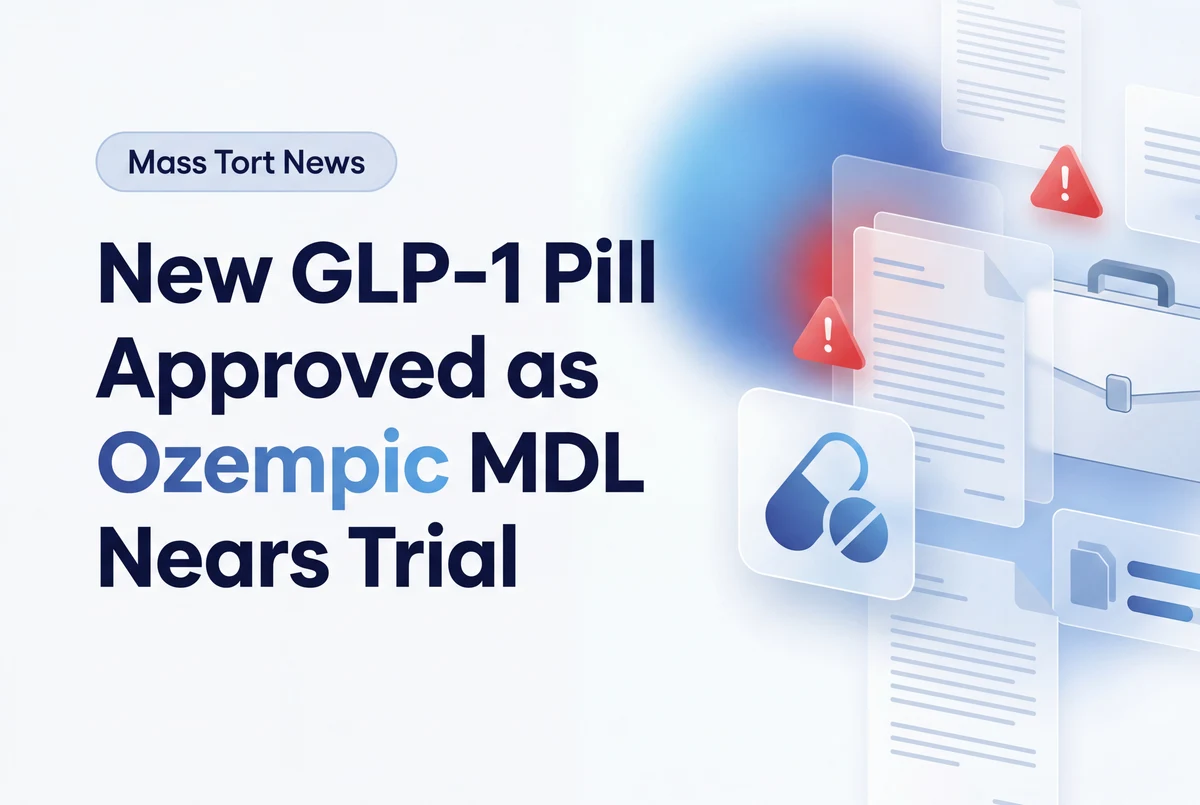
The FDA approved Eli Lilly's Foundayo (orforglipron) on April 1, 2026, the first oral GLP-1 weight loss medication that can be taken without food or water timing restrictions. The approval expands a drug class that is the subject of coordinated federal litigation, with 3,363 cases pending in MDL 3094 and summary judgment and Daubert deadlines scheduled for late April.
Foundayo's commercial launch began April 6 through Eli Lilly's LillyDirect digital pharmacy, with pricing set at $25 per month for commercially insured patients and $149 to $349 per month for self-pay, lower than current injectable GLP-1 list prices. The medication received approval in 50 days under the FDA's National Priority Voucher program.
Pending GLP-1 cases in MDL 3094, up 153% since January 2025 (MDL Update)
Foundayo price with commercial insurance (Eli Lilly)
FDA approval timeline under Priority Voucher program (FDA)
Clinical Background on Foundayo
Foundayo is a non-peptide, small-molecule GLP-1 receptor agonist, representing a different chemical structure from injectable semaglutide (Ozempic, Wegovy) and tirzepatide (Mounjaro, Zepbound) products. In the ATTAIN-1 clinical trial of 3,127 adults, participants on the highest dose (36 mg) achieved an average 12.4% weight reduction over 72 weeks.
Unlike oral semaglutide formulations that require 30 minutes of fasting with plain water, Foundayo can be taken with or without food, which analysts expect will drive broad patient adoption.
Safety Warnings on Foundayo Label
GLP-1 Class Medications
The GLP-1 drug class currently includes nine FDA-approved brand medications across two primary manufacturers:
Novo Nordisk: Ozempic and Rybelsus (semaglutide for type 2 diabetes), Wegovy injection and oral formulation (semaglutide for chronic weight management), Victoza and Saxenda (liraglutide)
Eli Lilly: Mounjaro (tirzepatide for type 2 diabetes), Zepbound (tirzepatide for chronic weight management), and Foundayo (orforglipron for weight management)
Eli Lilly is a named defendant in MDL 3094 regarding Mounjaro. Foundayo adds an oral product to the company's portfolio as market adoption expands.
MDL 3094 Pretrial Schedule
MDL 3094, consolidated before Judge Karen S. Marston in the Eastern District of Pennsylvania, is approaching key procedural milestones. Expert discovery closed in late March 2026. Daubert motions to challenge expert testimony are due April 28, with summary judgment motions scheduled for April 30.
Plaintiffs allege that GLP-1 receptor agonists cause severe gastrointestinal conditions, including gastroparesis, bowel obstruction, necrotizing pancreatitis, gallbladder disease, and aspiration injuries during anesthesia. The FDA added a gastroparesis warning to the Ozempic label in October 2025.
Traditional Approach vs LlamaLab Solution
Traditional Approach
Delayed Warning Labels
GLP-1 labels lacked explicit warnings regarding gastroparesis and stomach paralysis for years
Regulatory Updates
FDA required gastroparesis warning additions to semaglutide labeling in October 2025
Adverse Event Disputes
Litigation centers on whether manufacturers adequately reported serious GI events
Hidden & Unpredictable Costs
Per-page fees, rush charges, and surprise bills that blow up your budget
LlamaLab Solution
Reverse Provider Search
Uses insurance data to fill in treatment gaps clients don't always remember across PCPs and specialists
Fast Record Retrieval
Retrieval averages 4 days with ~30-40% returned same-day on electronic requests
Recoverable Disbursement
Itemized per-case invoices flow through as recoverable case disbursements on settlement statements
Flat Transparent, Risk-free Pricing
1 flat fee covers all costs. Only pay full price for cases that authorize
Vision Loss Litigation in MDL-3163
A July 2024 study published in JAMA Ophthalmology by researchers at Massachusetts Eye and Ear reported that patients taking semaglutide had a 4.28-fold increased risk of developing NAION (non-arteritic anterior ischemic optic neuropathy), with overweight patients experiencing a 7.64-fold higher risk.
These findings resulted in more than 140 vision loss lawsuits that were severed into a separate multidistrict litigation, MDL-3163, in December 2025.
Wrongful Death Claims
In March 2026, the family of Marsha Ettinghoff, a 76-year-old patient who died from complications of gastroparesis after six months of Ozempic therapy, filed a wrongful death action. The complaint alleges symptoms were initially attributed to food poisoning prior to fatal pulmonary aspiration during medical transport.
Market Dynamics and Pricing
On February 24, 2026, Novo Nordisk announced plans to lower Wegovy list prices by approximately 50% and Ozempic by approximately 35%, effective January 1, 2027. On March 31, the company introduced direct-to-consumer self-pay subscriptions through telehealth providers.
Foundayo's pricing structure ($25 per month with insurance) introduces further pricing adjustments across the market, supporting wider patient adoption.
Next Steps for Law Firms
Key Points
Essential takeaways from this article
Summary
GLP-1 litigation continues to develop as new formulations enter the market. Foundayo's approval expands the treatment category to oral small molecules, while MDL 3094 approaches key judicial determinations on general causation and warning adequacy.
Law firms evaluating GLP-1 claims require comprehensive records across primary care physicians, gastroenterologists, and imaging facilities.
Building GLP-1 Case Inventory?
LlamaLab retrieves medical records across treating providers in 4 days on average, using reverse provider search with insurance data to identify every specialist.
Sources: FDA, Eli Lilly, MDL Update, JAMA Ophthalmology, Reuters, Novo Nordisk.
Stay Updated with Latest Insights
Get the latest articles about medical record retrieval and legal tech delivered to your inbox.