Guides & Resources
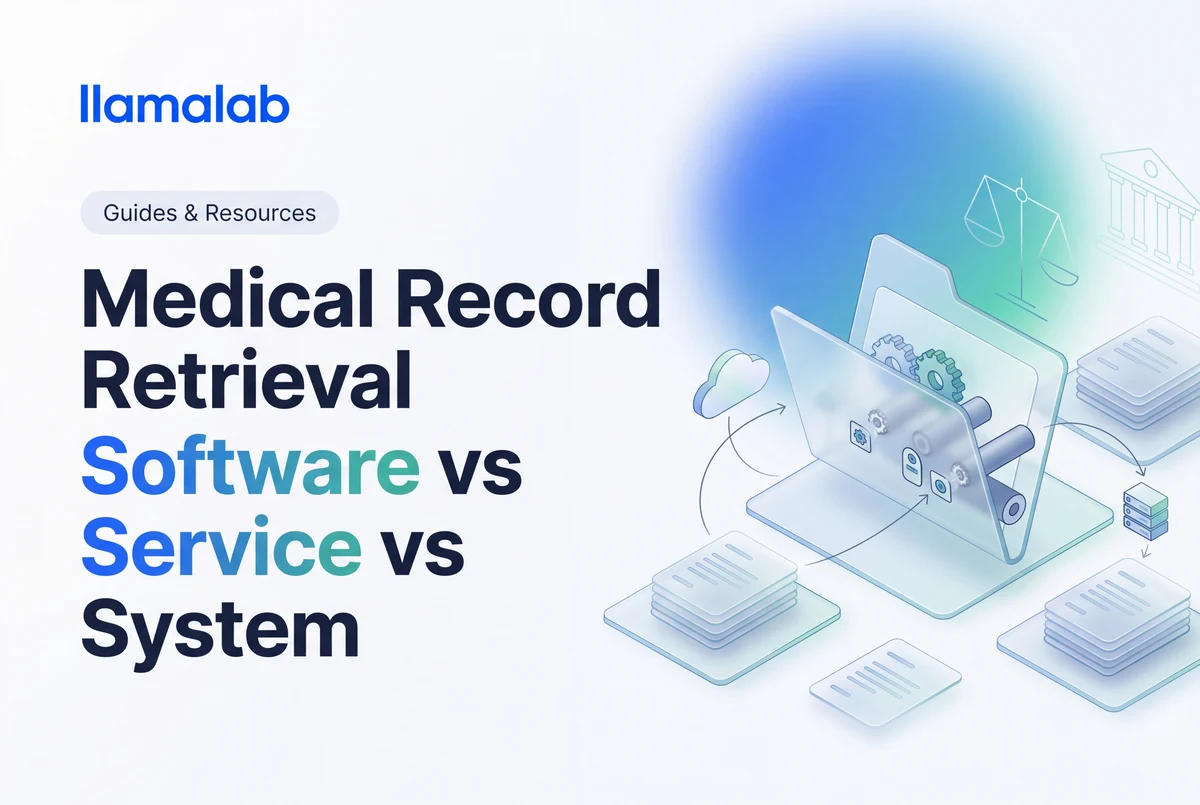
Medical Record Retrieval Software vs Service vs System
Retrieval software gives your staff a tool. A retrieval service fills requests. A retrieval system owns the whole job. How law firms should choose.
 Sep 24
News and expert insights on medical record retrieval, legal technology, and practice management
Retrieval software gives your staff a tool. A retrieval service fills requests. A retrieval system owns the whole job. How law firms should choose.
Sep 24
Judge Rodgers set a Nov. 30, 2026 deadline to register for the Depo-Provera settlement, with BrownGreer administering and payments expected in Q1 2027.
 Sep 22
DOJ reports Camp Lejeune offers above $1 billion and payouts above $827 million, with 52 days left on the court's Oct. 30 global settlement deadline.


Where AI genuinely changes a law firm's records workflow, where it changes nothing, and what to verify before believing a retrieval vendor's AI claim.
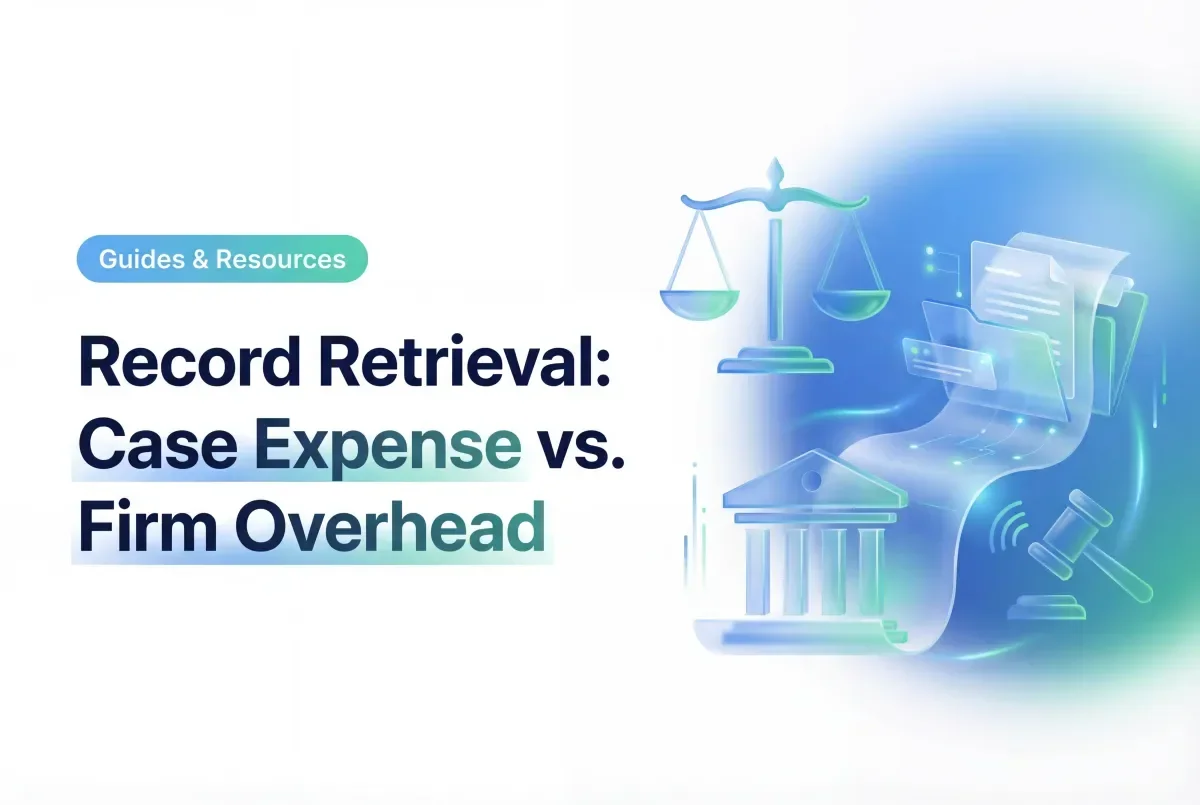
A line-by-line model for calculating the real cost of internal medical record retrieval, including the one expense category that never shows up on an invoice.