How LlamaLab Retrieves Medical Records in 4 Days

CTO at LlamaLab
How LlamaLab Retrieves Medical Records in 4 Days
The industry standard for medical record retrieval is 30 to 60 days. For VA records, it frequently exceeds 90 days.
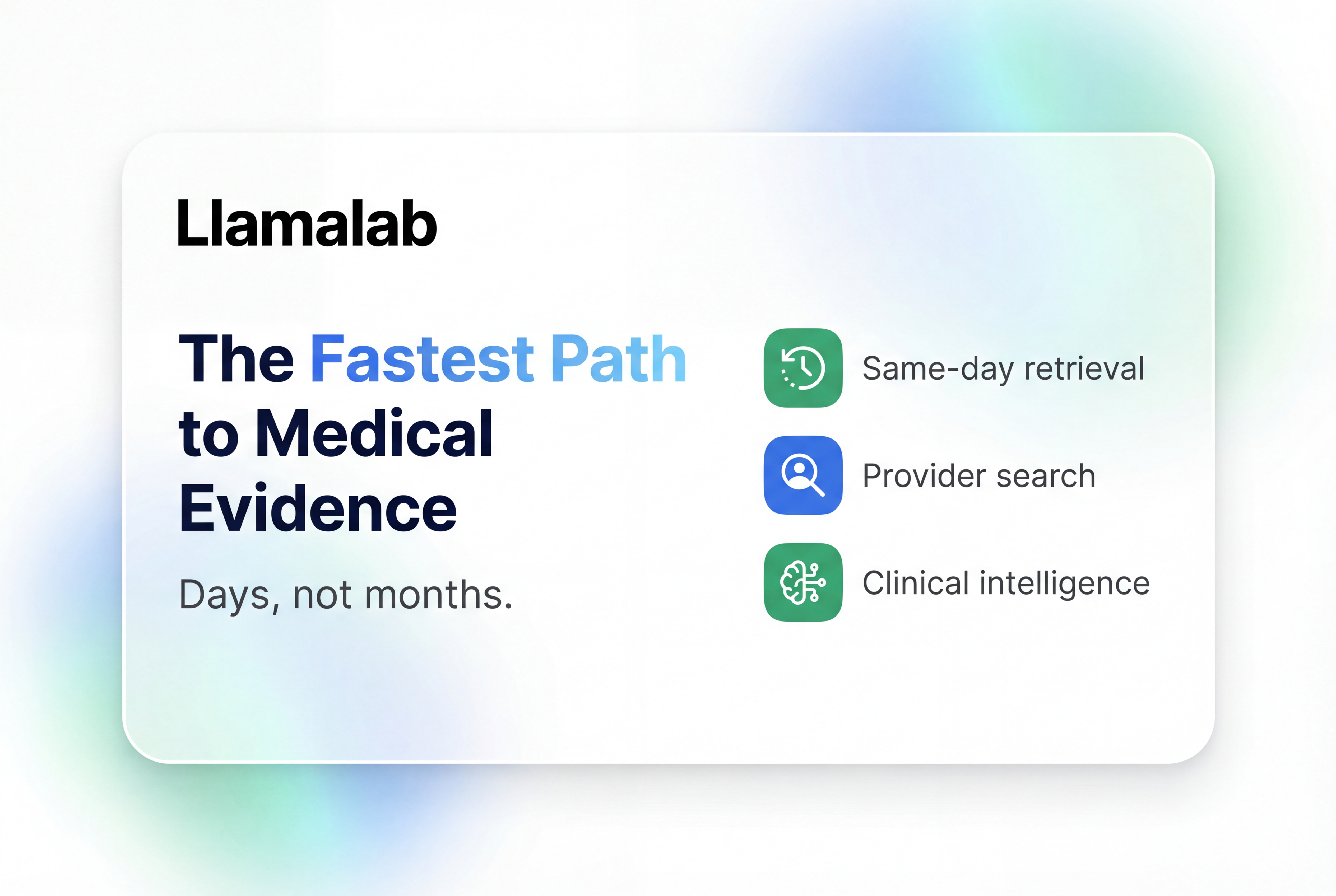
At LlamaLab, records come back in 4 days on average, and 30 to 40% come back the same day.
Same-day is a share, not a guarantee. In some states the same-day share is closer to 60%, and some states and facilities average about 24 hours.
This turnaround comes from automated routing and validation infrastructure. Here is how the system operates.
Average turnaround
Same-day share
Humans required for most requests
Why traditional medical record retrieval takes 30-60 days
Traditional retrieval methods rely on repeated manual steps at every stage:
Traditional Approach vs LlamaLab Solution
Traditional Approach
Manual Authorization
Staff manually generates each form
Provider Research
Search for the right fax number or address
Queue-Based Processing
Requests sit in queues at medical facilities
Manual Follow-Up
Someone has to remember to check on pending requests
Hidden & Unpredictable Costs
Per-page fees, rush charges, and surprise bills that blow up your budget
LlamaLab Solution
AI Authorization
Instant validation and processing
Provider Intelligence
AI routes to the right contact automatically
Real-Time Processing
Requests processed in seconds, not hours
Automated Tracking
System monitors and escalates automatically
Flat Transparent, Risk-free Pricing
1 flat fee covers all costs. Only pay full price for cases that authorize
Each manual touchpoint adds hours or days. Stacking those delays produces the 30 to 60 day industry standard. LlamaLab automates these steps to remove the bottlenecks.
The four stages of zero-touch retrieval
The system manages the retrieval process across four automated stages:
Stage 1: Smart Authorization
AI validates and formats authorization forms before submission
Stage 2: Provider Intelligence
System identifies the exact department and contact for each provider
Stage 3: Automated Routing
Requests sent via automated fax with built-in delivery confirmation
Stage 4: Document Processing
Incoming records automatically processed, OCR'd, and organized
Stage 1: Smart authorization
The primary cause of retrieval delays is rejected authorization forms rather than slow providers.
Common rejection reasons include:
- Expired authorizations (most expire in 90 to 180 days)
- Missing required fields (date ranges, signatures, facility names)
- Unmet state-specific statutory language
- Form mismatches against internal facility policies
Our system pre-validates every authorization form before submission, verifying:
- Completeness: All required fields populated
- Validity: Signature dates within acceptable ranges
- State compliance: Specific language and witness rules satisfied
- Provider matching: Correct legal entity names applied
The Result
If an authorization has an error, the system flags it immediately rather than waiting weeks for a provider rejection notice.
Stage 2: Provider intelligence
Fast retrieval requires routing requests to the correct department immediately. This is challenging because:
- Large health systems operate dozens of fax lines across departments
- Hospital networks frequently acquire and rebrand facilities
- Contact rosters change regularly
- Health Information Management (HIM) departments are often housed at separate addresses from clinics
LlamaLab's Provider Intelligence Engine maintains an updated database of facility contact points. When a request is submitted, the system:
- Matches the provider using automated entity resolution
- Identifies the specific department handling records release
- Verifies the contact line remains active
- Selects the optimal route based on past facility response times
Why This Matters
Stage 3: Automated routing
Fax remains the universal communication channel in healthcare. Every medical facility in the United States accepts fax requests, from major health systems to small rural clinics.
The delay in traditional retrieval comes from manual transmission: dialing, feeding paper, and checking confirmations manually.
LlamaLab's automated fax system:
- Transmits requests immediately upon submission
- Verifies delivery confirmations programmatically
- Retries failed transmissions automatically
- Logs full transmission audit trails for every file
Share of records back the same day
Automated transmission without manual dialing
Lost or untracked requests
When a provider faxes records back, the system receives them electronically, routes them to the matter, and starts processing right away.
Stage 4: Document processing
Receiving files is only the first step. Organizing thousands of pages of scanned PDFs often takes law firm staff multiple days.
When records arrive at LlamaLab:
- Automatic file receipt: Incoming files match to the correct client matter
- OCR processing: Every page becomes searchable, including handwritten clinical notes
- Document classification: The system categorizes document types, such as lab results, operative reports, progress notes, and itemized billing
- Data extraction: Clinical findings and charges are organized into structured tables
- Timeline integration: Records integrate chronologically into the master case file
No Processing Backlog
What zero human intervention looks like
When a request completes without human intervention, the workflow runs end to end:
- You submit the request through the platform
- AI validates the authorization and routes to the correct facility
- Fax transmission completes automatically with delivery confirmation
- Provider receives the request and returns records electronically
- Records are ingested, OCR'd, and indexed automatically
- You receive a notification that the organized records are ready
Routine requests require no manual follow-ups, phone calls, or processing queues.
The Speed Difference
When retrieval specialists step in
Some requests require direct human oversight:
- Complex authorizations: Specialized state disclosures or facility-specific affidavits
- Non-responsive providers: Facilities requiring phone escalation
- Specialized requests: Subpoenas, legal holds, or restricted records
- Document verification: Verifying missing pages or partial releases
LlamaLab's retrieval specialists manage these exceptions. Because automated pipelines handle routine volume, specialists can focus their time on complex requests that need dedicated follow-up.
Summary comparison
Faster medical record retrieval comes from replacing manual administrative steps with automated workflows:
| Traditional Approach | LlamaLab Approach |
|---|---|
| Manual authorization review | AI validation in seconds |
| Staff researches provider contacts | Provider Intelligence Engine |
| Manual fax or mail | Automated fax with confirmation |
| Records sit in processing queue | Instant document processing |
| Staff follows up on status | Automated tracking and escalation |
The result is records that come back in 4 days on average, with 30 to 40% back the same day, and no human intervention for most requests. In some states the same-day share is closer to 60%, and some states and facilities average about 24 hours. Learn more about how our medical record retrieval service for lawyers accelerates case timelines.
See Retrieval Speed on Your Cases
Records come back in 4 days on average, and 30 to 40% come back the same day. Run a free pilot on your next case to test turnaround and document completeness.
Questions about LlamaLab's retrieval technology? Contact our team at support@llamalab.ai or schedule a demo to see the platform in action.
Stay Updated with Latest Insights
Get the latest articles about medical record retrieval and legal tech delivered to your inbox.