Guides & Resources
8 min read
What In-House Medical Record Retrieval Costs a Law Firm
A line-by-line model for calculating the real cost of internal medical record retrieval, including the one expense category that never shows up on an invoice.
Read

Enterprise Account Executive at LlamaLab
Jake Bell is an Enterprise Account Executive at LlamaLab, where he works with personal injury and mass tort firms on medical record retrieval and case qualification. He has more than a decade in legal tech sales, including roles at Filevine, NetDocuments, and Actionstep, and focuses on how firms buy, implement, and get ROI from retrieval platforms.
11 articles
A line-by-line model for calculating the real cost of internal medical record retrieval, including the one expense category that never shows up on an invoice.
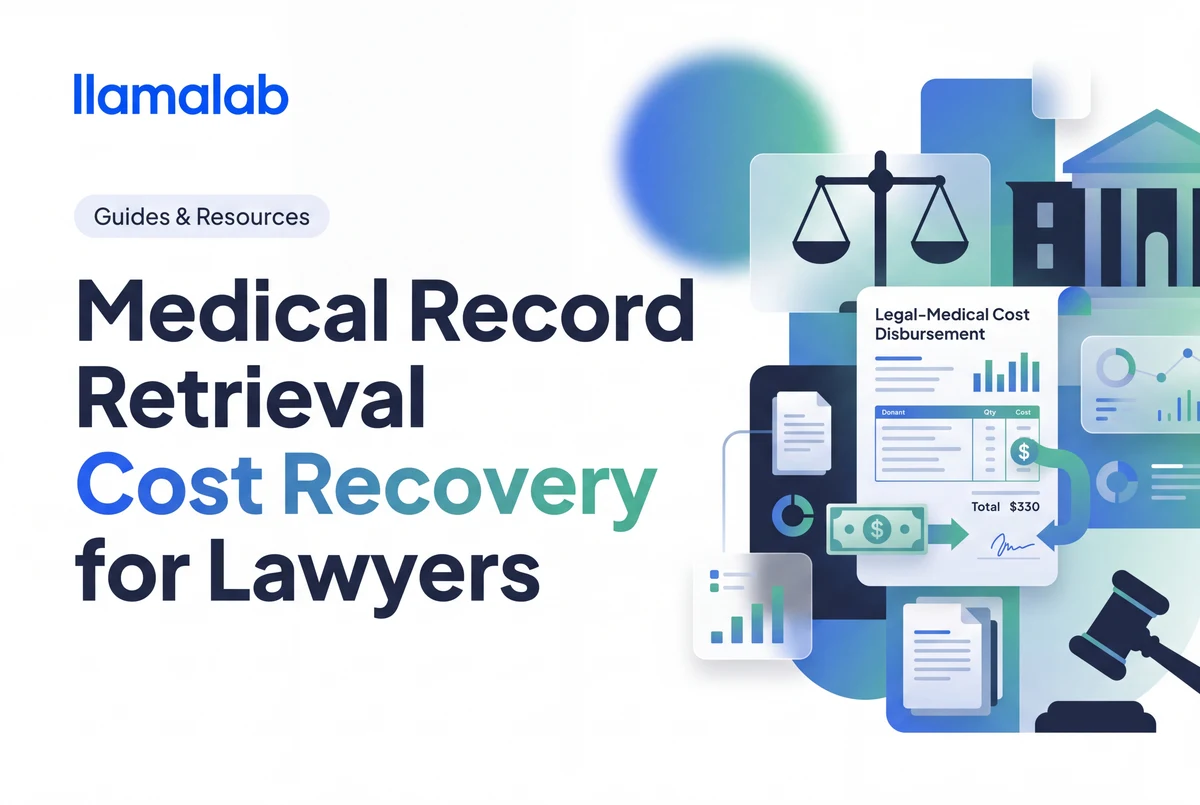
How PI and litigation firms recover medical record retrieval as a case disbursement, and why staff time and software seats do not qualify.

What personal injury and mass tort firms should expect in 2026: 30 to 60 days in-house, 4 days on average with a modern retrieval service.
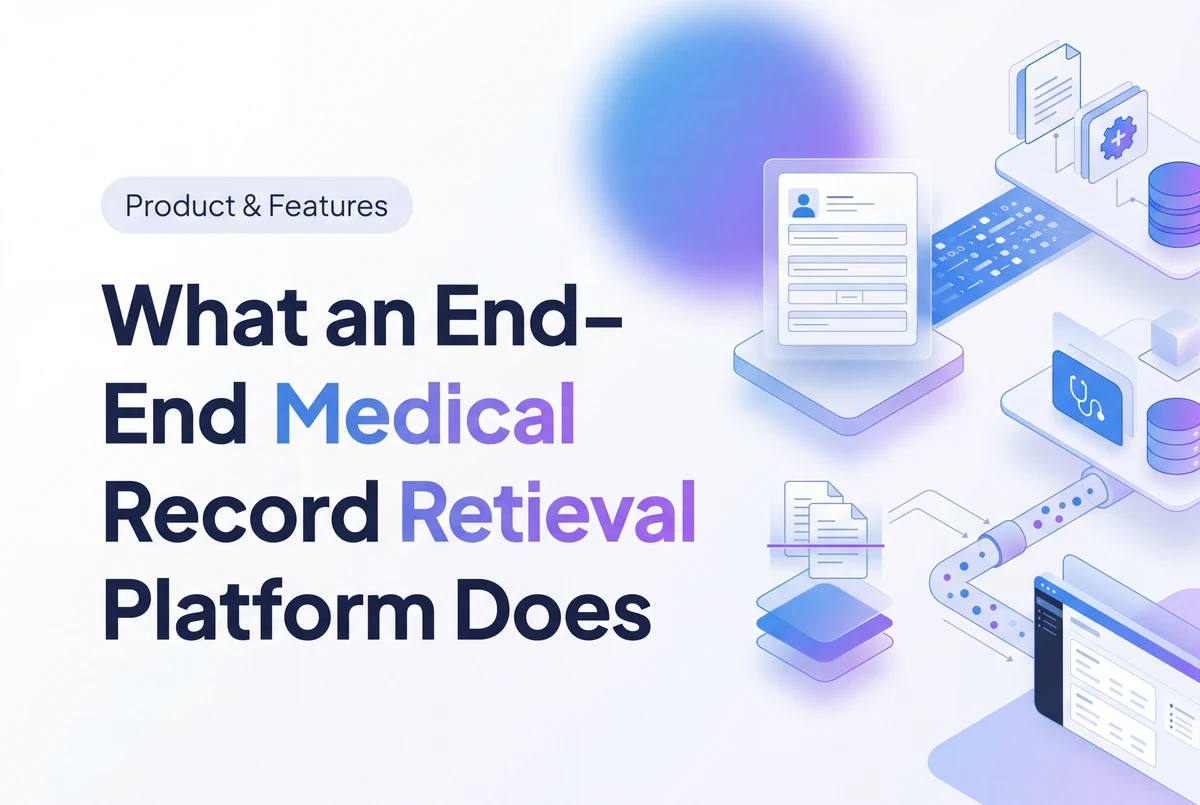
Most PI firms stitch 4-5 vendors together for records. End-to-end platforms collapse authorization, retrieval, analysis, and case analytics into one pipeline.

In-house paralegals are overhead. Outsourced retrieval is a recoverable case expense. Here's the math on why this shift saves firms $700K+.

Personal injury cases depend on medical evidence. Records come back in 4 days on average, and 30 to 40% come back the same day, so your firm can evaluate claims faster.

Automated retrieval delivers records in 4 days on average, with 30-40% returned same day, compared to the industry's 45-day average.

Avoid common vendor pitfalls that cost law firms time and money. What questions to ask, pricing red flags to watch for, and how to evaluate retrieval partners.

How to properly document, allocate, and recover medical record expenses in litigation, maximizing case value while maintaining ethical compliance.

With retrieval delays averaging 45-90 days, law firms are turning to automated routing and reverse search to secure complete records in 4 days on average.
How staff hours, case delays, and unrecovered disbursements impact law firm profitability, and how to structure retrieval as a recoverable case expense.