
Guides & Resources
7 min read
AI in Medical Record Retrieval: What It Does for Law Firms
Where AI genuinely changes a law firm's records workflow, where it changes nothing, and what to verify before believing a retrieval vendor's AI claim.
Read
14 articles with this tag
Where AI genuinely changes a law firm's records workflow, where it changes nothing, and what to verify before believing a retrieval vendor's AI claim.

The order of operations personal injury firms use to automate records retrieval, which steps to keep human, and the four metrics that tell you it worked.
How PI and litigation firms recover medical record retrieval as a case disbursement, and why staff time and software seats do not qualify.
What personal injury and mass tort firms should expect in 2026: 30 to 60 days in-house, 4 days on average with a modern retrieval service.

Hospitals can legally take 30 days plus a 30-day extension, and enforcement is rare: 54 OCR actions since 2019 against roughly 31,000 complaints a year.
New York's $268B budget eliminates the 90/180 'serious injury' rule and bars recovery for plaintiffs more than 50% at fault.
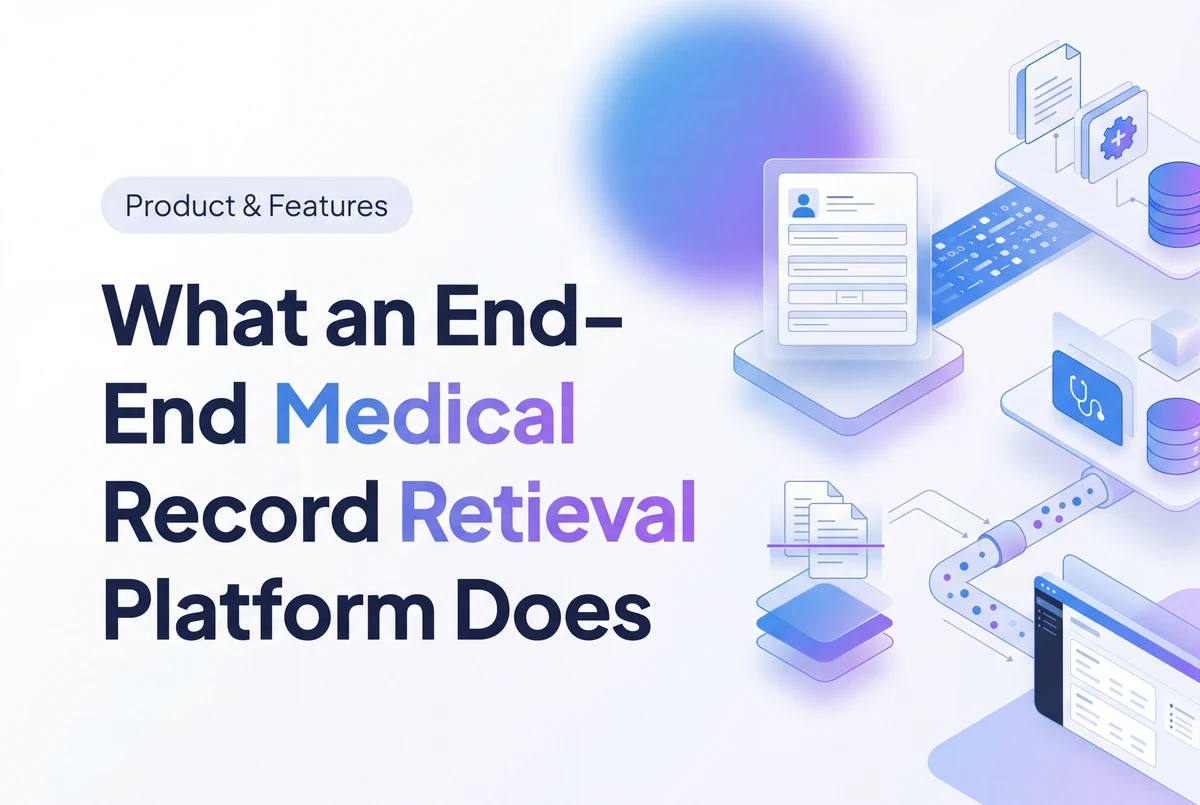
Most PI firms stitch 4-5 vendors together for records. End-to-end platforms collapse authorization, retrieval, analysis, and case analytics into one pipeline.
56% of PI firms rank medical record review as their top AI need. Firms using AI broadly report 3x higher revenue growth.
Clients do not always recall every treating facility. How reverse provider search cross-references insurance and prescription data to uncover complete medical records.
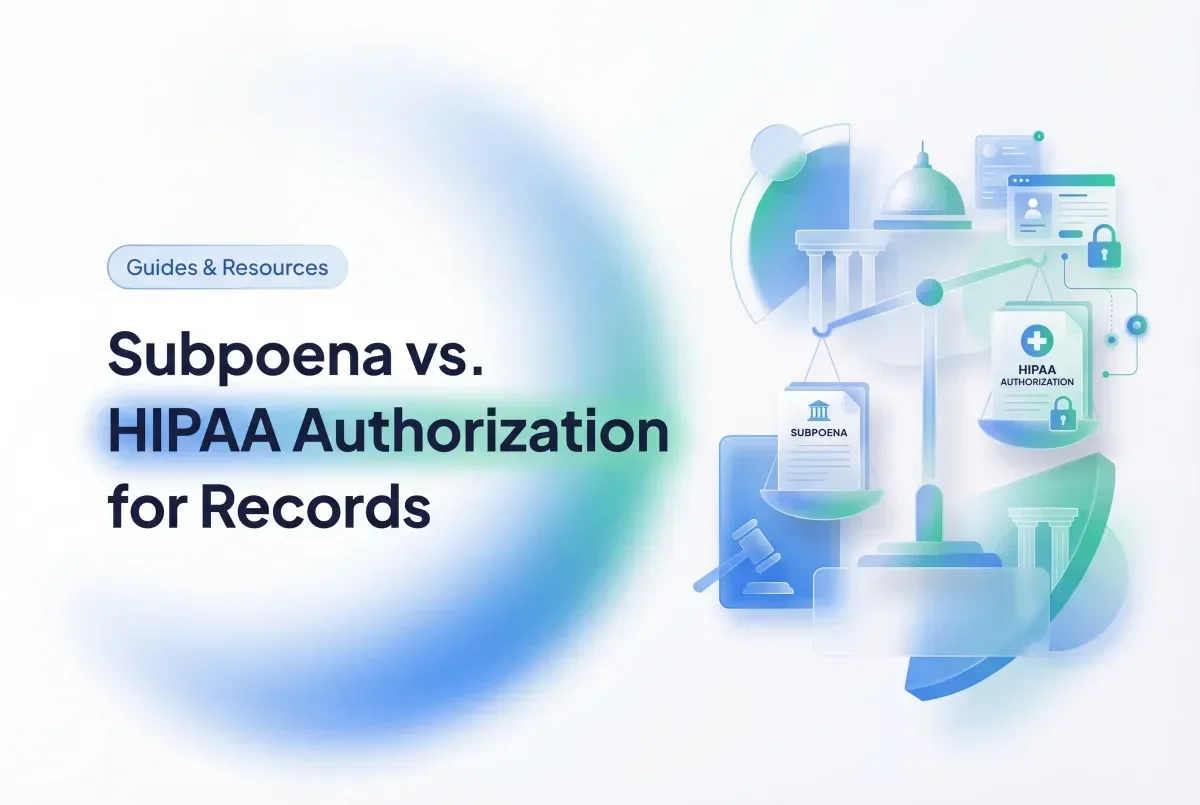
Authorization takes 30-45 days. Subpoenas compel responses in 7-14. When to use each method, and mistakes that get requests rejected.
HIPAA gives providers 30 days, but expedited services deliver in 3-7. Here's every timeline attorneys need to know.

Four states raised auto insurance minimums as bodily injury claim severity rose 40%. Practical implications for personal injury caseloads.
Personal injury cases depend on medical evidence. Records come back in 4 days on average, and 30 to 40% come back the same day, so your firm can evaluate claims faster.
Automated retrieval delivers records in 4 days on average, with 30-40% returned same day, compared to the industry's 45-day average.